Home / Events in Florence
The events below are listed alphabetically:
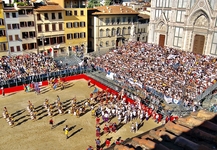 Calcio Fiorentino or Calcio in Costume - better known in Florence as Calcio Storico - is a traditional football game dating back to the 15th century. A violent mix of football, soccer, wrestling and perhaps boxing, the tournament is played in medieval costume every year from mid to late June.
The final match is usually held on June 24th (last year it was moved up a bit due to an election). The ev... read more.
Calcio Fiorentino or Calcio in Costume - better known in Florence as Calcio Storico - is a traditional football game dating back to the 15th century. A violent mix of football, soccer, wrestling and perhaps boxing, the tournament is played in medieval costume every year from mid to late June.
The final match is usually held on June 24th (last year it was moved up a bit due to an election). The ev... read more.
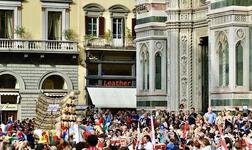 Carro Matto, which roughly translates to "Crazy Cart" in English, is the traditional Florentine festival held annually to celebrate the new wine harvest. The event is celebrated on the feast day of Saint Michael, who is the patron saint of grocers and merchants. It has historical roots going back to the Middle Ages, and is one of the many traditions that contribute to the rich cultural fabric of F... read more.
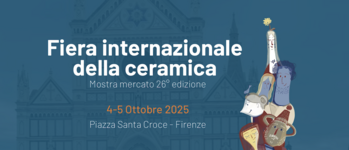 One of our favorite annual events in Florence is the Fiera della Ceramica (ceramics fair).
Historically this event was held in Piazza Santissima Annunziata, but in 2023 the event was moved to Piazza Santa Croce. This year's event will take place on the first weekend of October, the 4th and 5th. The event is organized by the Arte della Ceramica, and you can find additional information on their web... read more.
One of our favorite annual events in Florence is the Fiera della Ceramica (ceramics fair).
Historically this event was held in Piazza Santissima Annunziata, but in 2023 the event was moved to Piazza Santa Croce. This year's event will take place on the first weekend of October, the 4th and 5th. The event is organized by the Arte della Ceramica, and you can find additional information on their web... read more.
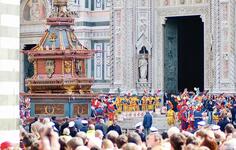 If you want to witness one of the more interesting and exciting rituals of Easter in Florence, than the "Explosion of The Cart" or "Scoppio del Carro" (the cart itself is also known as "il Brindellone" or the "Cart of St. John") is a must see event on Easter Sunday in Piazza del Duomo.
Here is an excellent video of the entire procession, with drummers, flag throwers, the arrival of the church lea... read more.
If you want to witness one of the more interesting and exciting rituals of Easter in Florence, than the "Explosion of The Cart" or "Scoppio del Carro" (the cart itself is also known as "il Brindellone" or the "Cart of St. John") is a must see event on Easter Sunday in Piazza del Duomo.
Here is an excellent video of the entire procession, with drummers, flag throwers, the arrival of the church lea... read more.
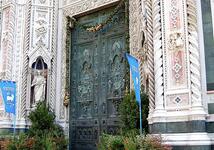 Santa Reparata is celebrated as a saint of the Catholic Church and the co-patron saint of Florence annually on October 8th. The ancient Cathedral of Florence is dedicated to her worship due to the legend that she miraculously interceded on behalf of the Florentines to repel a siege of the Ostrogoths in 406 AD. This victory is seen as a turning point in the history of Florence, marking the definiti... read more.
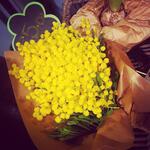 Each year on March 8th, International Women's Day is celebrated throughout the world. The first International Women's Day was held in 1911. Thousands of events occur to mark the economic, political and social achievements of women. Organisations, governments, charities, educational institutions, women's groups, corporations and the media celebrate the day. Italian's call this day the "Festa della ... read more.
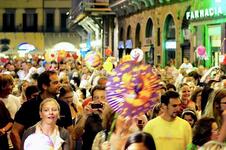 September is a time for many Florentine and Tuscan events and festivals. One of our favorite nights of the year in Florence is the Festa della Rificolona, an evening parade of sorts through the streets of Florence, with children carrying paper lanterns lit with candles, while other children shoot the lanterns with pea shooters! (In the modern version these "pea shooters" are hollow metal straws an... read more.
 Florence Celebrates St. Joseph's Day on March 19th
Every year on March 19th, Italy pauses to honor one of its most beloved saints -- San Giuseppe, or Saint Joseph -- in a celebration that blends deep Catholic faith, ancient pagan tradition, and an irresistible amount of food. In Florence, as throughout Tuscany, the day carries a warmth and intimacy that reflects the Florentine character: rooted in... read more.
Florence Celebrates St. Joseph's Day on March 19th
Every year on March 19th, Italy pauses to honor one of its most beloved saints -- San Giuseppe, or Saint Joseph -- in a celebration that blends deep Catholic faith, ancient pagan tradition, and an irresistible amount of food. In Florence, as throughout Tuscany, the day carries a warmth and intimacy that reflects the Florentine character: rooted in... read more.
 The Festival del Maggio Musicale Fiorentino is one of Italy's oldest and most prestigious music festivals. Founded in 1933 in Florence, it's a major international event focused primarily on opera and classical music performances. The festival typically takes place annually during spring and early summer months (particularly May, hence the name "Maggio" which means May in Italian).
The festival fe... read more.
The Festival del Maggio Musicale Fiorentino is one of Italy's oldest and most prestigious music festivals. Founded in 1933 in Florence, it's a major international event focused primarily on opera and classical music performances. The festival typically takes place annually during spring and early summer months (particularly May, hence the name "Maggio" which means May in Italian).
The festival fe... read more.
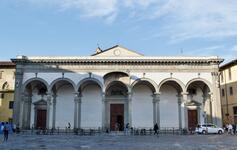 The Festival of the Annunziata, also known as the Feast of the Annunciation, is a significant religious and cultural event celebrated in Florence, Italy. The feast commemorates the announcement by the Archangel Gabriel to the Virgin Mary that she would conceive and become the mother of Jesus Christ.
The festival typically takes place on March 25th, exactly nine months before Christmas, the day tr... read more.
The Festival of the Annunziata, also known as the Feast of the Annunciation, is a significant religious and cultural event celebrated in Florence, Italy. The feast commemorates the announcement by the Archangel Gabriel to the Virgin Mary that she would conceive and become the mother of Jesus Christ.
The festival typically takes place on March 25th, exactly nine months before Christmas, the day tr... read more.
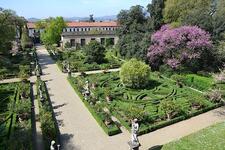 Market Exhibition of Rare and Unusual Plants
The Firenze Flower Show, a market exhibition of rare and unusual plants, will return on the weekend of October 10-11, 2026, in the beautiful Giardino Corsini, at Via della Scala 115 in Florence. The autumn event will return with the best exhibitors from across the country, offering the many visitors two days of fun and learning on the themes of floric... read more.
Market Exhibition of Rare and Unusual Plants
The Firenze Flower Show, a market exhibition of rare and unusual plants, will return on the weekend of October 10-11, 2026, in the beautiful Giardino Corsini, at Via della Scala 115 in Florence. The autumn event will return with the best exhibitors from across the country, offering the many visitors two days of fun and learning on the themes of floric... read more.
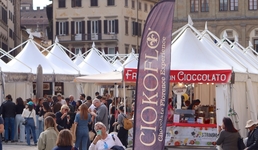 The 2026 edition of "Fiera del cioccolato artigianale di Firenze" (artisanal chocolate fair) took place from March 12th to 15th in Piazza Santa Croce. If you like chocolate, this event is a can't miss!
Here are some photos from the event in past years:
Piazza Santa Croce with the chocolate fair tent
Chocolate Vendor
Chocolate Kebab
Chocolate covered cherries!
Chocolate fries, cheese, an... read more.
The 2026 edition of "Fiera del cioccolato artigianale di Firenze" (artisanal chocolate fair) took place from March 12th to 15th in Piazza Santa Croce. If you like chocolate, this event is a can't miss!
Here are some photos from the event in past years:
Piazza Santa Croce with the chocolate fair tent
Chocolate Vendor
Chocolate Kebab
Chocolate covered cherries!
Chocolate fries, cheese, an... read more.
 The Florence Gelato Festival below is no longer happening:
These comments were about the first festival in 2010:
"We had lots of great gelato, but the lines were long at times and the overall organization seemed a bit lacking. It did seem to be a big success however judging by the number of people eating ice cream. The "Gelato University" put on in Piazza Santissima Annunziata by industry giant ... read more.
The Florence Gelato Festival below is no longer happening:
These comments were about the first festival in 2010:
"We had lots of great gelato, but the lines were long at times and the overall organization seemed a bit lacking. It did seem to be a big success however judging by the number of people eating ice cream. The "Gelato University" put on in Piazza Santissima Annunziata by industry giant ... read more.
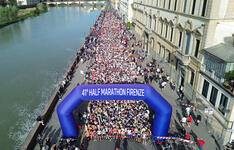 The Florence Half Marathon is an annual event that usually takes place in April. This year the event is on April 4th.
Every year, running enthusiasts from across the globe converge upon the stone streets and picturesque landmarks of Florence to participate in this remarkable race. Organized by the Florence Marathon Association, the Florence Half Marathon isn't just about the thrill of competition... read more.
The Florence Half Marathon is an annual event that usually takes place in April. This year the event is on April 4th.
Every year, running enthusiasts from across the globe converge upon the stone streets and picturesque landmarks of Florence to participate in this remarkable race. Organized by the Florence Marathon Association, the Florence Half Marathon isn't just about the thrill of competition... read more.
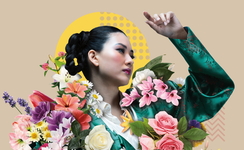 This event usually takes place sometime during the second half of March. You can always check their website for the most up to date information:
https://koreafilmfest.com
It has now been running for over 20 years! The screenings are in several locations around Florence including La Compagnia Cinema, Teatro Verdi, and Palazzo Medici Riccardi.... read more.
This event usually takes place sometime during the second half of March. You can always check their website for the most up to date information:
https://koreafilmfest.com
It has now been running for over 20 years! The screenings are in several locations around Florence including La Compagnia Cinema, Teatro Verdi, and Palazzo Medici Riccardi.... read more.
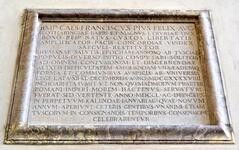 Up until 1750 Florence began the civic year not in accordance with the modern solar calendar on January 1st, but on March 25th, marking the start of the year from the religious "Festival of the Annunziata" (which also - surely not by coincidence - is near the first day of spring).
There is a plaque (above) in the Loggia dei Lanzi commemorating the event:
"Emperor Francis, Pious, Fortunate, Augus... read more.
Up until 1750 Florence began the civic year not in accordance with the modern solar calendar on January 1st, but on March 25th, marking the start of the year from the religious "Festival of the Annunziata" (which also - surely not by coincidence - is near the first day of spring).
There is a plaque (above) in the Loggia dei Lanzi commemorating the event:
"Emperor Francis, Pious, Fortunate, Augus... read more.
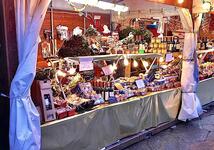 Since Italians don't have Thanksgiving to interfere, they get right down to business and start thinking about Christmas in mid-November, by which time the shops are already decorated and pushing their Christmas wares. By December the streets in the center will be draped with lights and Piazza Repubblica and Piazza Duomo will put up their annual Christmas trees. But you really know Christmas is com... read more.
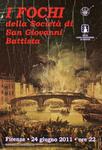 "I Fochi di San Giovanni" (The Fires of Saint John) is a traditional celebration held in Florence, Italy, in honor of the city's patron saint, Saint John the Baptist. This event takes place annually on the evening of June 24th and is one of Florence's most important and festive public holidays.
Historical Background
Saint John the Baptist: Saint John the Baptist is one of the patron saints of Flo... read more.
"I Fochi di San Giovanni" (The Fires of Saint John) is a traditional celebration held in Florence, Italy, in honor of the city's patron saint, Saint John the Baptist. This event takes place annually on the evening of June 24th and is one of Florence's most important and festive public holidays.
Historical Background
Saint John the Baptist: Saint John the Baptist is one of the patron saints of Flo... read more.
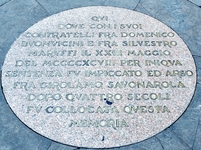 If you're planning a trip to Florence in May, you might come across La Fiorita, a little-known but meaningful local tradition that takes place every year on the morning of May 23rd. This quiet ceremony marks the anniversary of the execution of Girolamo Savonarola, the infamous 15th-century friar and reformer. It's a unique cultural experience that offers a different kind of insight into Florence's... read more.
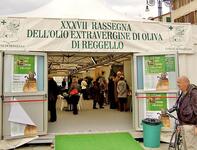 This annual event of the first pressing of Olive Oil from the town of Reggello is a great opportunity to get the full flavor of the spicy, green and gold Tuscan olive oil (our favorite!), and of course it is all for sale! For many years this event was held in Piazza Santa Croce - but the festival now takes place in the town of Reggello (about a 45 minute drive for the center of Florence). If you h... read more.
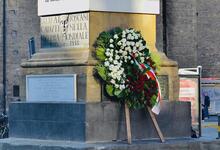 Every April 25th, Italy commemorates Liberation Day (Festa della Liberazione), marking the country's hard-won freedom at the end of World War II and the Nazi occupation. While the day is celebrated across the nation with parades, ceremonies, and cultural events, the historic city of Florence has its own powerful connection to the Italian Resistance movement that makes the occasion particularly poi... read more.
 The Mille Miglia or the "thousand miles" has been called the "most beautiful race in the world". Initiated in 1927, the race was canceled for reasons of safety in 1957 and twenty years later was revived as a road rally.
This year the race takes place from the 9th to 13th of June, featuring hundreds of the most important vintage racing cars (and some contemporary models) from around the world, par... read more.
The Mille Miglia or the "thousand miles" has been called the "most beautiful race in the world". Initiated in 1927, the race was canceled for reasons of safety in 1957 and twenty years later was revived as a road rally.
This year the race takes place from the 9th to 13th of June, featuring hundreds of the most important vintage racing cars (and some contemporary models) from around the world, par... read more.
 The "Mostra Internazionale dell'Artigianato" (MIDA) or "International Handicrafts Market" welcomes artisans from all over the world as well as Italy. This is a unique fair, full of hand-made crafts from across the globe - clothing, furniture, carpets, jewelry, silverware, collectibles, gifts, wine, & food. It features traditional handmade products that are inspired by ethnic and classical history,... read more.
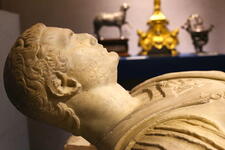 If you are an antique art lover, this is a can't miss event to put on your calendar if you are in Florence, or maybe even a reason to come in itself - the Mostra Mercato Internazionale dell'Antiquariato (Florence Antiques Biennial):
The International Biennial of Antiques in Florence is one of the most important events dedicated to Italian art on the international scene, with over 28,000 visitors ... read more.
If you are an antique art lover, this is a can't miss event to put on your calendar if you are in Florence, or maybe even a reason to come in itself - the Mostra Mercato Internazionale dell'Antiquariato (Florence Antiques Biennial):
The International Biennial of Antiques in Florence is one of the most important events dedicated to Italian art on the international scene, with over 28,000 visitors ... read more.
 The Notte Bianca or "White Night" in Florence takes place on the evening of April 30th every year. The streets flow with people making rounds between food stalls, exhibitions, art installations, museums, dj sets, and live music and dance performances scattered throughout the center of Florence.
This information is out of date! The Notte Bianca was cancelled during the COVID 19 epidemic. As f... read more.
The Notte Bianca or "White Night" in Florence takes place on the evening of April 30th every year. The streets flow with people making rounds between food stalls, exhibitions, art installations, museums, dj sets, and live music and dance performances scattered throughout the center of Florence.
This information is out of date! The Notte Bianca was cancelled during the COVID 19 epidemic. As f... read more.
 This is an historical event that has hosted a plant and flower exhibition full of unusual, local, and collectible varieties for over 170 years! 75 exhibitors from all over Italy will partake this year. There is fair coming up at the end of April this year, their website has more details yet:
SPRING EXHIBITION OF PLANTS AND FLOWERS
Horticulture Garden (Florence)
From Saturday 25 April to Sunday 0... read more.
This is an historical event that has hosted a plant and flower exhibition full of unusual, local, and collectible varieties for over 170 years! 75 exhibitors from all over Italy will partake this year. There is fair coming up at the end of April this year, their website has more details yet:
SPRING EXHIBITION OF PLANTS AND FLOWERS
Horticulture Garden (Florence)
From Saturday 25 April to Sunday 0... read more.
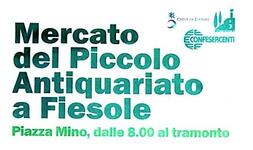 There is a small antiques market in Fiesole on the first Sunday of the month, except July and August. At Piazza Mino da Fiesole. Mercato del Piccolo Antiquariato a Fiesole.
UPDATE! We have just received confirmation that there is a small antique market in Fiesole! This is from the Comune of Fiesole: "The small antiques market is held in Piazza Mino in Fiesole every first Sunday of the month. E... read more.
There is a small antiques market in Fiesole on the first Sunday of the month, except July and August. At Piazza Mino da Fiesole. Mercato del Piccolo Antiquariato a Fiesole.
UPDATE! We have just received confirmation that there is a small antique market in Fiesole! This is from the Comune of Fiesole: "The small antiques market is held in Piazza Mino in Fiesole every first Sunday of the month. E... read more.
Events in Florence
These are the major annual (recurring every year) tourism, cultural events, and festivals that take place in Florence, Italy.
We strive to keep them updated each year, and we are also removing older, one-off events as we continually update Florence-On-Line. If you find something outdated or wrong, please let us know!
The events below are listed alphabetically:
 Calcio Storico 2026
Calcio Fiorentino or Calcio in Costume - better known in Florence as Calcio Storico - is a traditional football game dating back to the 15th century. A violent mix of football, soccer, wrestling and perhaps boxing, the tournament is played in medieval costume every year from mid to late June.
The final match is usually held on June 24th (last year it was moved up a bit due to an election). The ev... read more. Carro Matto
Carro Matto, which roughly translates to "Crazy Cart" in English, is the traditional Florentine festival held annually to celebrate the new wine harvest. The event is celebrated on the feast day of Saint Michael, who is the patron saint of grocers and merchants. It has historical roots going back to the Middle Ages, and is one of the many traditions that contribute to the rich cultural fabric of F... read more. Ceramics Fair (Fiera della Ceramica)
One of our favorite annual events in Florence is the Fiera della Ceramica (ceramics fair).
Historically this event was held in Piazza Santissima Annunziata, but in 2023 the event was moved to Piazza Santa Croce. This year's event will take place on the first weekend of October, the 4th and 5th. The event is organized by the Arte della Ceramica, and you can find additional information on their web... read more. Explosion of The Cart of St. John, Easter Sunday in Florence
If you want to witness one of the more interesting and exciting rituals of Easter in Florence, than the "Explosion of The Cart" or "Scoppio del Carro" (the cart itself is also known as "il Brindellone" or the "Cart of St. John") is a must see event on Easter Sunday in Piazza del Duomo.
Here is an excellent video of the entire procession, with drummers, flag throwers, the arrival of the church lea... read more. Feast of St. Reparata
Santa Reparata is celebrated as a saint of the Catholic Church and the co-patron saint of Florence annually on October 8th. The ancient Cathedral of Florence is dedicated to her worship due to the legend that she miraculously interceded on behalf of the Florentines to repel a siege of the Ostrogoths in 406 AD. This victory is seen as a turning point in the history of Florence, marking the definiti... read more. Festa della Donna
Each year on March 8th, International Women's Day is celebrated throughout the world. The first International Women's Day was held in 1911. Thousands of events occur to mark the economic, political and social achievements of women. Organisations, governments, charities, educational institutions, women's groups, corporations and the media celebrate the day. Italian's call this day the "Festa della ... read more. Festa della Rificolona
September is a time for many Florentine and Tuscan events and festivals. One of our favorite nights of the year in Florence is the Festa della Rificolona, an evening parade of sorts through the streets of Florence, with children carrying paper lanterns lit with candles, while other children shoot the lanterns with pea shooters! (In the modern version these "pea shooters" are hollow metal straws an... read more. Festa di San Giuseppe, St. Joseph's Day
Florence Celebrates St. Joseph's Day on March 19th
Every year on March 19th, Italy pauses to honor one of its most beloved saints -- San Giuseppe, or Saint Joseph -- in a celebration that blends deep Catholic faith, ancient pagan tradition, and an irresistible amount of food. In Florence, as throughout Tuscany, the day carries a warmth and intimacy that reflects the Florentine character: rooted in... read more. Festival del Maggio Musicale Fiorentino
The Festival del Maggio Musicale Fiorentino is one of Italy's oldest and most prestigious music festivals. Founded in 1933 in Florence, it's a major international event focused primarily on opera and classical music performances. The festival typically takes place annually during spring and early summer months (particularly May, hence the name "Maggio" which means May in Italian).
The festival fe... read more. Festival of the Annunziata
The Festival of the Annunziata, also known as the Feast of the Annunciation, is a significant religious and cultural event celebrated in Florence, Italy. The feast commemorates the announcement by the Archangel Gabriel to the Virgin Mary that she would conceive and become the mother of Jesus Christ.
The festival typically takes place on March 25th, exactly nine months before Christmas, the day tr... read more. Firenze Flower Show
Market Exhibition of Rare and Unusual Plants
The Firenze Flower Show, a market exhibition of rare and unusual plants, will return on the weekend of October 10-11, 2026, in the beautiful Giardino Corsini, at Via della Scala 115 in Florence. The autumn event will return with the best exhibitors from across the country, offering the many visitors two days of fun and learning on the themes of floric... read more. Florence Chocolate Fair
The 2026 edition of "Fiera del cioccolato artigianale di Firenze" (artisanal chocolate fair) took place from March 12th to 15th in Piazza Santa Croce. If you like chocolate, this event is a can't miss!
Here are some photos from the event in past years:
Piazza Santa Croce with the chocolate fair tent
Chocolate Vendor
Chocolate Kebab
Chocolate covered cherries!
Chocolate fries, cheese, an... read more. Florence Gelato Festival
The Florence Gelato Festival below is no longer happening:
These comments were about the first festival in 2010:
"We had lots of great gelato, but the lines were long at times and the overall organization seemed a bit lacking. It did seem to be a big success however judging by the number of people eating ice cream. The "Gelato University" put on in Piazza Santissima Annunziata by industry giant ... read more. Florence Half Marathon
The Florence Half Marathon is an annual event that usually takes place in April. This year the event is on April 4th.
Every year, running enthusiasts from across the globe converge upon the stone streets and picturesque landmarks of Florence to participate in this remarkable race. Organized by the Florence Marathon Association, the Florence Half Marathon isn't just about the thrill of competition... read more. Florence Korea Film Festival
This event usually takes place sometime during the second half of March. You can always check their website for the most up to date information:
https://koreafilmfest.com
It has now been running for over 20 years! The screenings are in several locations around Florence including La Compagnia Cinema, Teatro Verdi, and Palazzo Medici Riccardi.... read more. Florentine New Year
Up until 1750 Florence began the civic year not in accordance with the modern solar calendar on January 1st, but on March 25th, marking the start of the year from the religious "Festival of the Annunziata" (which also - surely not by coincidence - is near the first day of spring).
There is a plaque (above) in the Loggia dei Lanzi commemorating the event:
"Emperor Francis, Pious, Fortunate, Augus... read more. German Christmas Market in Piazza Santa Croce
Since Italians don't have Thanksgiving to interfere, they get right down to business and start thinking about Christmas in mid-November, by which time the shops are already decorated and pushing their Christmas wares. By December the streets in the center will be draped with lights and Piazza Repubblica and Piazza Duomo will put up their annual Christmas trees. But you really know Christmas is com... read more. I fochi di San Giovanni
"I Fochi di San Giovanni" (The Fires of Saint John) is a traditional celebration held in Florence, Italy, in honor of the city's patron saint, Saint John the Baptist. This event takes place annually on the evening of June 24th and is one of Florence's most important and festive public holidays.
Historical Background
Saint John the Baptist: Saint John the Baptist is one of the patron saints of Flo... read more. La Fiorita, the Commemoration of Savonarola's Death
If you're planning a trip to Florence in May, you might come across La Fiorita, a little-known but meaningful local tradition that takes place every year on the morning of May 23rd. This quiet ceremony marks the anniversary of the execution of Girolamo Savonarola, the infamous 15th-century friar and reformer. It's a unique cultural experience that offers a different kind of insight into Florence's... read more. La Rassegna dell'Olio di Reggello
This annual event of the first pressing of Olive Oil from the town of Reggello is a great opportunity to get the full flavor of the spicy, green and gold Tuscan olive oil (our favorite!), and of course it is all for sale! For many years this event was held in Piazza Santa Croce - but the festival now takes place in the town of Reggello (about a 45 minute drive for the center of Florence). If you h... read more. Liberation Day in Florence: Celebrating Freedom and Resistance
Every April 25th, Italy commemorates Liberation Day (Festa della Liberazione), marking the country's hard-won freedom at the end of World War II and the Nazi occupation. While the day is celebrated across the nation with parades, ceremonies, and cultural events, the historic city of Florence has its own powerful connection to the Italian Resistance movement that makes the occasion particularly poi... read more. Mille Miglia
The Mille Miglia or the "thousand miles" has been called the "most beautiful race in the world". Initiated in 1927, the race was canceled for reasons of safety in 1957 and twenty years later was revived as a road rally.
This year the race takes place from the 9th to 13th of June, featuring hundreds of the most important vintage racing cars (and some contemporary models) from around the world, par... read more. Mostra Internazionale dell'artigianato di Firenze
The "Mostra Internazionale dell'Artigianato" (MIDA) or "International Handicrafts Market" welcomes artisans from all over the world as well as Italy. This is a unique fair, full of hand-made crafts from across the globe - clothing, furniture, carpets, jewelry, silverware, collectibles, gifts, wine, & food. It features traditional handmade products that are inspired by ethnic and classical history,... read more. Mostra Mercato Internazionale dell'Antiquariato
If you are an antique art lover, this is a can't miss event to put on your calendar if you are in Florence, or maybe even a reason to come in itself - the Mostra Mercato Internazionale dell'Antiquariato (Florence Antiques Biennial):
The International Biennial of Antiques in Florence is one of the most important events dedicated to Italian art on the international scene, with over 28,000 visitors ... read more. Notte Bianca
The Notte Bianca or "White Night" in Florence takes place on the evening of April 30th every year. The streets flow with people making rounds between food stalls, exhibitions, art installations, museums, dj sets, and live music and dance performances scattered throughout the center of Florence.
This information is out of date! The Notte Bianca was cancelled during the COVID 19 epidemic. As f... read more. Plant & Flower Fair
This is an historical event that has hosted a plant and flower exhibition full of unusual, local, and collectible varieties for over 170 years! 75 exhibitors from all over Italy will partake this year. There is fair coming up at the end of April this year, their website has more details yet:
SPRING EXHIBITION OF PLANTS AND FLOWERS
Horticulture Garden (Florence)
From Saturday 25 April to Sunday 0... read more. Small Antiques Market, Fiesole
There is a small antiques market in Fiesole on the first Sunday of the month, except July and August. At Piazza Mino da Fiesole. Mercato del Piccolo Antiquariato a Fiesole.
UPDATE! We have just received confirmation that there is a small antique market in Fiesole! This is from the Comune of Fiesole: "The small antiques market is held in Piazza Mino in Fiesole every first Sunday of the month. E... read more. © 2005-2026 florence-on-line.com | About | Glossary | Newsletter | Site Map
Some links to external websites may be affiliate links (hotel bookings, guide books, activities, etc.). Using these services helps to support our efforts here with no additional costs to the user (you!).
Some links to external websites may be affiliate links (hotel bookings, guide books, activities, etc.). Using these services helps to support our efforts here with no additional costs to the user (you!).